Home › Clogged Drain
Clogged drain — what is worth trying yourself
A single slow fixture is often a ten-minute fix with a bucket. Several slow fixtures at once is a different problem entirely, and no amount of plunging will touch it.
A single slow fixture is often a ten-minute fix with a bucket. Several slow fixtures at once is a different problem entirely, and no amount of plunging will touch it.
On a bathroom sink or tub, most clogs are hair caught on the stopper mechanism a few inches down. Pull the stopper out — many lift straight out, others need a small nut under the sink released first — and clear what is on it. This single step resolves a large share of slow bathroom drains and costs nothing.
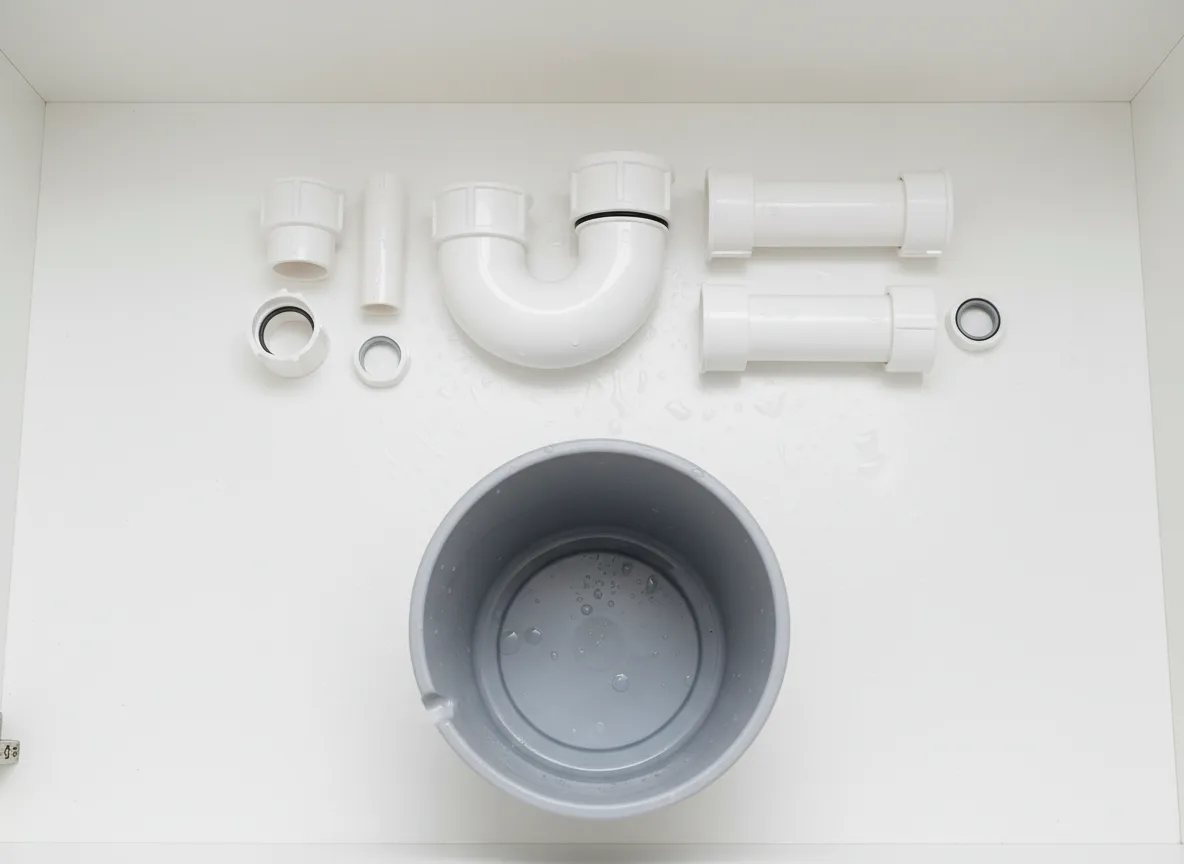
The U-shaped section under the sink is the next most common place for a blockage, and it is designed to come apart. Put a bucket under it, loosen the two slip nuts by hand or with pliers, and take it off. Most kitchen clogs are sitting in it. Clean it out, check the washers are seated when you reassemble, and tighten firmly by hand rather than with full force.
It rarely clears a genuine blockage — it tends to channel a narrow path through and leave the rest in place, so the clog returns within weeks. It generates heat in the trap, which damages older pipe and can deform plastic. And it leaves a caustic liquid standing in the line that the next person to open that trap has to deal with, which makes the professional job slower, more hazardous and more expensive. If you have already poured some in, say so when you book the visit.
If more than one fixture is slow, if a different fixture gurgles when you drain this one, if the toilet level moves when the washing machine empties, or if clearing it works and the problem returns within a few weeks — the blockage is downstream of the fixtures and the fixtures are not the problem. That is a main line issue, and it wants a camera rather than a plunger.
On a grease clog in a metal line, sometimes. Do not pour boiling water into a porcelain fixture or a PVC line — you can crack the first and soften the second. Hot tap water is the safer version.
A small hand auger is useful for a fixture line and cheap. The powered kind can punch through a pipe wall or wrap and damage a line if you do not know what you are doing.
Repeat clogs in the same spot almost always mean something structural — a sag holding water, scale narrowing the bore, or roots. A camera inspection tells you which, once, instead of paying to clear it repeatedly.
Send the details and we'll route it to a licensed local contractor.